
We went in search of places of power of the Holosiivsky forest in Kyiv. How big it is! We walked for two days and saw only a small part of the interesting things of the forest. We were in two parts of the forest, in two monasteries – the Holosiivskaya desert and the Kitaevskaya desert. I was amazed by one of these places – Kitaevskaya mountain and the monastery near it. An incredible mixture of the energy of Kievan Rus and blessed holiness! But let me tell you about everything in order of our two-day route. On the first day we went in search of interesting places from the side of the Exhibition Center
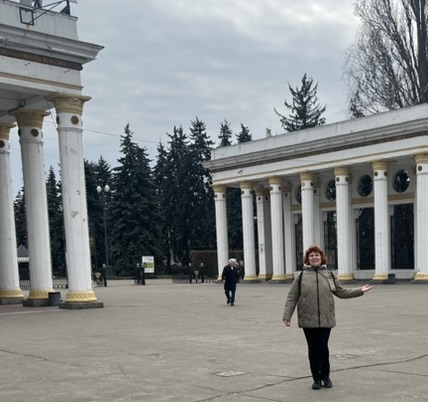
We went along a forest road through the Sergius Hermitage to the Holy Protection Monastery or the Goloseevskaya Hermitage and the Detka font.
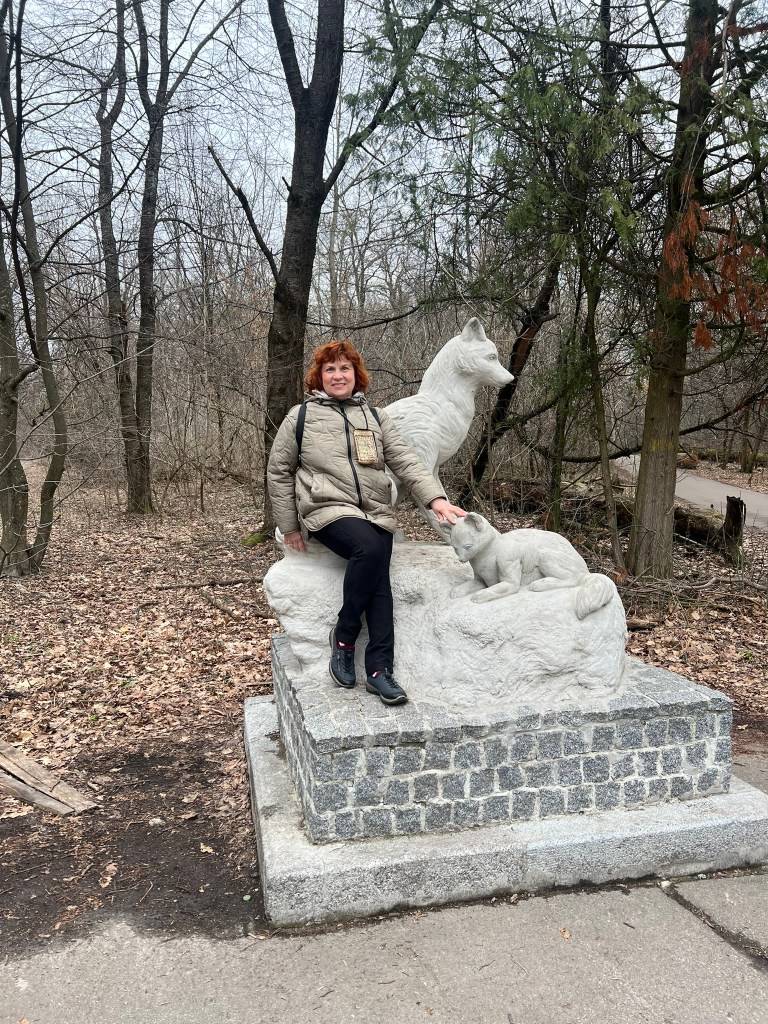
It was quite chilly on March 18, we were frozen and decided not to take a dip in the font. The road led through the Sergieva Pustyn, which is a space fenced with a palisade of branches on one of the hills.

The entrance is open. There are icons hanging at the entrance. There is no one inside. In the recess with the inscription “Grotto of the Virgin Mary”, dug in the ground, one can guess the place for prayer.

On the stands along the road there are children’s (or adult amateur) drawings with angels, Christmas bells, children. In this place people managed to create a special atmosphere of their faith, energetically pure. I would say that I felt good and calm here. On the other side of the hillock there were dwellings in the form of huts covered with carpets. Maybe there was someone inside. We didn’t see anyone. We only met one guy down by the stream.
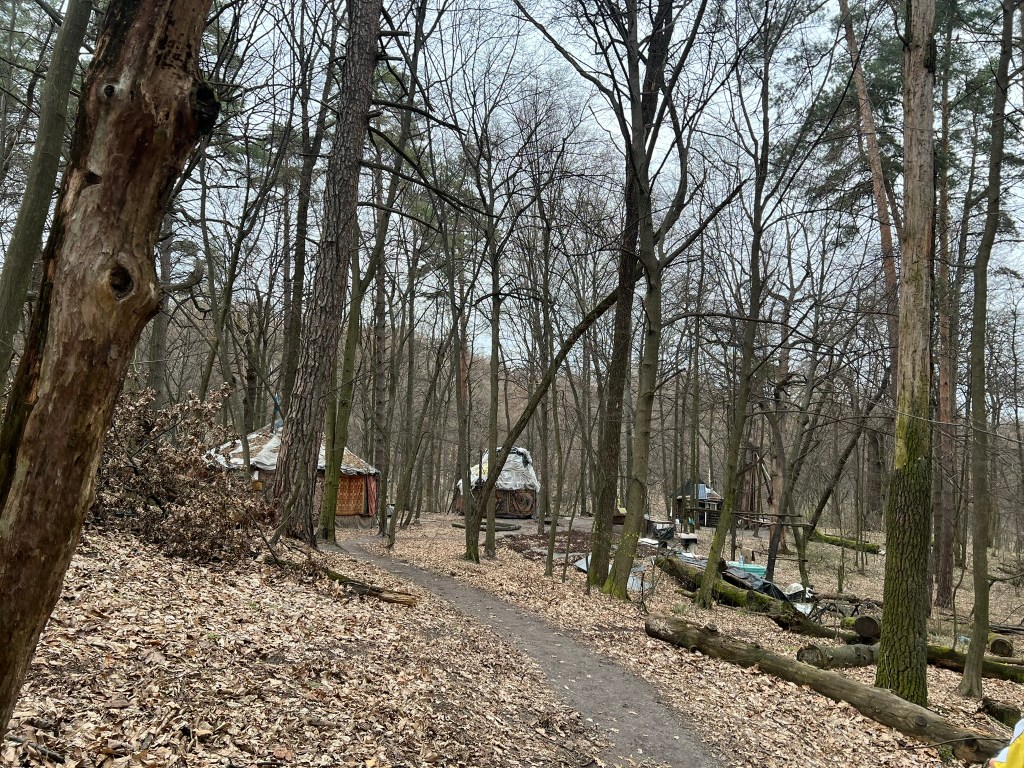
The road and the navigator led us along the stream to the Didorevka pond with gazebos for rest. I think that in the summer there are many vacationers here. Having gone around the pond on the left, we came out onto the road leading to the monastery, along which cars drove every now and then. Well, let’s see why they go there.
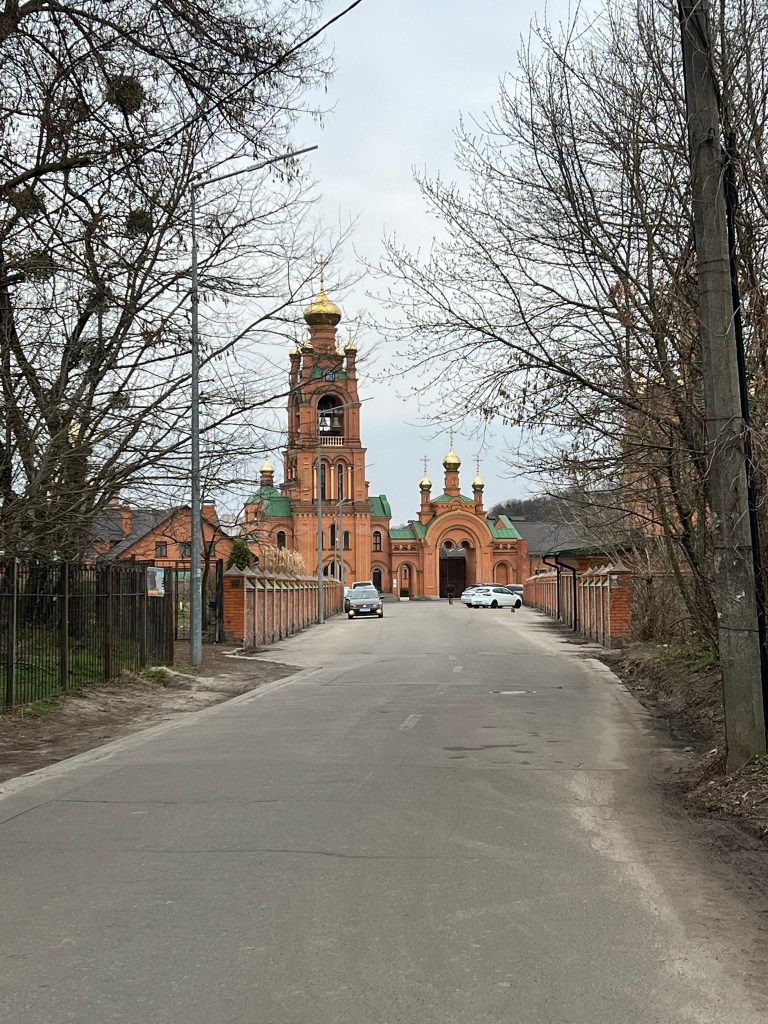
The Holy Protection Monastery sparkled with golden domes crowning the temple buildings made of new red bricks. To the right, before reaching the entrance to the main monastery, there was a place of residence and a temple where Mother Alipiya was reburied. The Goloseevskaya Pustyn is a skete of the Kiev-Pechersk Lavra, located in the forest on the southern outskirts of Kyiv. Monks lived here in the 18th-19th centuries, and since the second half of the 19th century, the residence of the Kyiv metropolitans was located here. In the 1950s – 1960s, the churches were dismantled as having no artistic value. Now all the temples here are new. Everything looks beautiful, but this is not what I am looking for in my travels to places of power. I appreciate antiquity, history, natural energy flows, unusual places where you can get a new experience. We drank hot tea in the monastery cafe. We bought some monastery wine, called a taxi to the metro and departed quickly and safely. On March 20, on the day of the spring equinox, we set off for the Holy Trinity Kitaevsky Monastery and the historic mountain next to it. We arrived from the Demeevsky bus station by minibus. We passed by an ancient cemetery and the white temples of the Kitaevsky Monastery opened up before us. I was struck by the energy of this place – an island of ancient Kievan Rus and faith. The area was inhabited by people as early as the 3rd-2nd millennium BC. At the beginning of the 20th century, amateur archaeologist Ertel suggested that the settlement of “Kuyava” mentioned in Arab sources, which preceded Kyiv, was founded here. The monastery is surrounded by lakes and hills from the east and south. One of the hills is called Kitay-gora. There are caves there, there is an archaeological complex from the 9th-13th centuries – a burial mound and settlements on the bank of a stream. Historians identify this complex with the southern outpost of ancient Kyiv – Peresechino. Accordingly, the name “Kitaevo” most likely comes from the word “Kitai”, which means “fortress”.

In the 14th century, a cave monastery was founded in Kitaev, which was subordinated to the Kiev-Pechersk Monastery from the 17th century. The monastery was called the Kitaevskaya Hermitage.
Главный храм был закрыт.

It is opened on certain days and hours. Near it there is a gazebo with the relics of Dositheus – a woman who was considered a man in life. She lived in a cave inside the mountain. The holy canal is active.
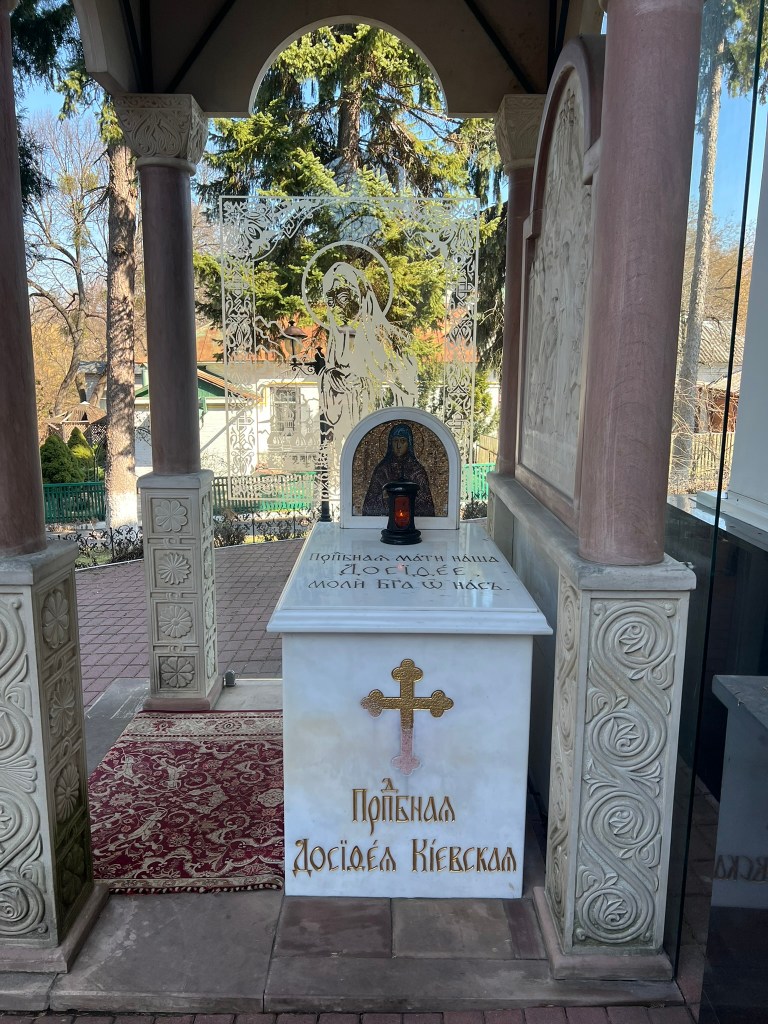
We went into a small temple. I wanted to light candles and stay here. After the temple we went down to the lakes.
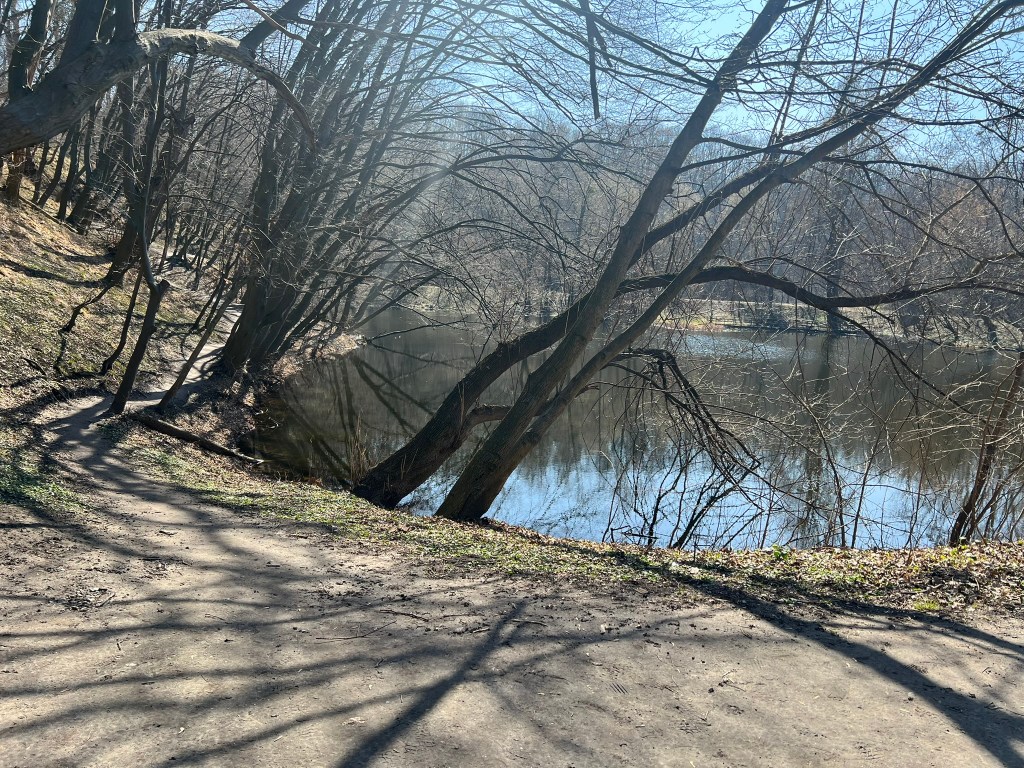
Grace – that is the word that I can use to describe the energy of this place most accurately. The causeway bridge, created by monks, takes us across calm mirror lakes to the world of Kievan Rus and cave ascetics – to Kitaevskaya Mountain. Sunbeams shine through the thick March clouds, measuring out midday and the beginning of the wheel of time moving towards spring. I am glad that Kyiv has a blessed place from which the countdown of the year begins. This is a good sign for the city.
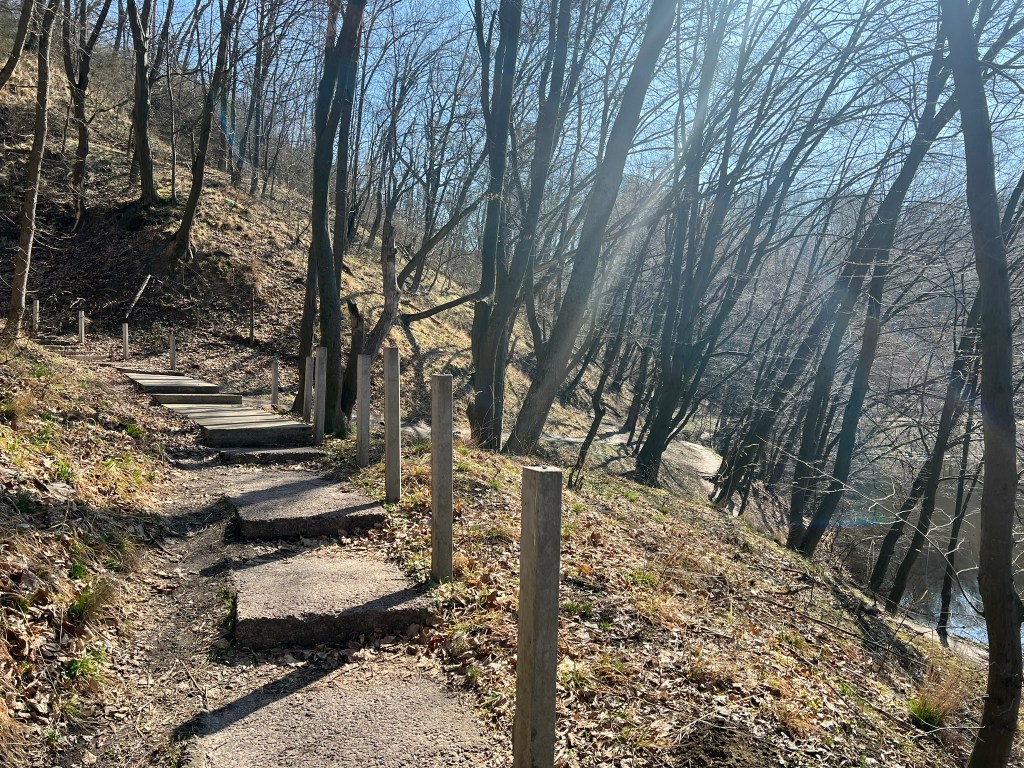
On the mountain, completely dug up by ancient buildings, we see entrances to caves. They are closed. But there is also something to see from above. We walk along the top of the mountain and see embankment passages and depressions that are at least several centuries, or even millennia old.
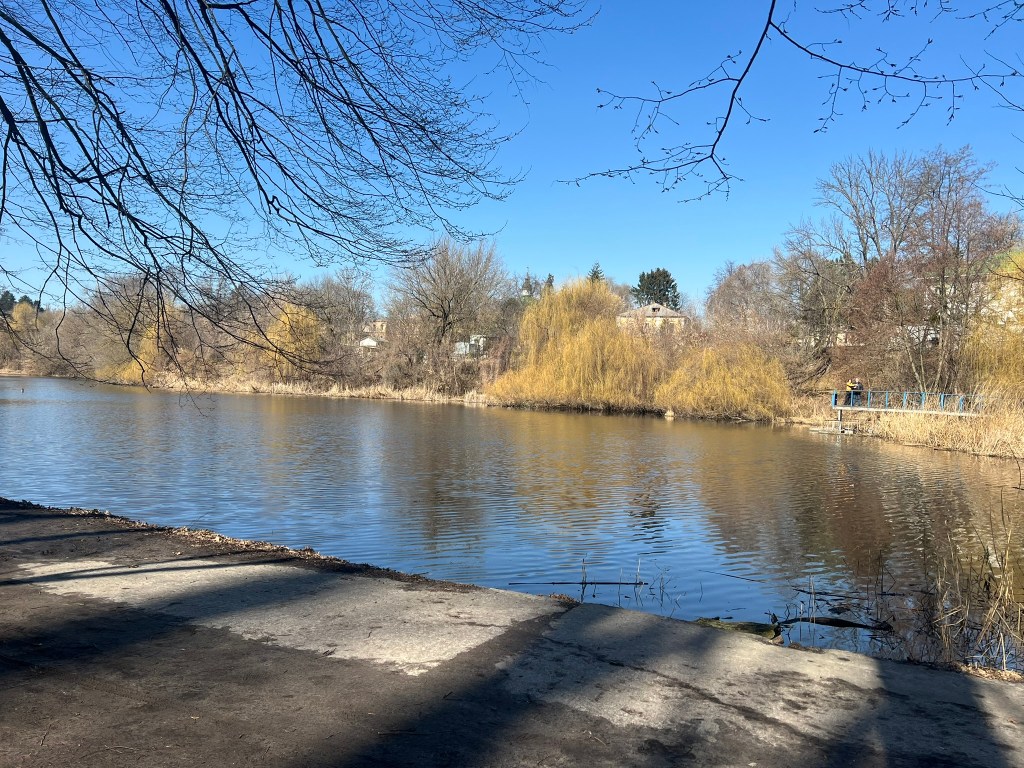
How many people lived in the caves in Kyiv for a thousand years? Some went into the caves not because of a good life, and some had a spiritual need to retire. And if some of them achieved holiness, then the place will forever bear the imprint of the saint. And when there are many saints, then we can talk about holy land. This is the land we walk on! 18-20.03.2025 Kyiv
 Belena Travel Blog